
Commitment to Care: April is Heartworm Prevention Month, a perfect time to shine a light on a serious but preventable disease that affects both dogs and cats.
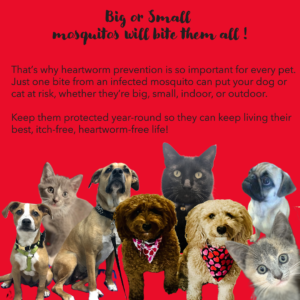
Heartworm disease is caused by a parasitic worm called Dirofilaria immitis, which is spread through mosquito bites. When an infected mosquito bites your pet, it can transmit microscopic larvae into the bloodstream. Over time, these larvae mature into adult worms that live in the heart, lungs, and surrounding blood vessels, leading to severe lung disease, heart failure, and even death if left untreated.
Heartworms in Dogs
Dogs are natural hosts for heartworms, which means the worms can grow and reproduce easily in their bodies. Infected dogs may carry dozens, or even hundreds of worms. Early stages often show little to no symptoms, but as the disease progresses, you may notice:
- Persistent cough
- Fatigue after mild activity
- Weight loss
- Difficulty breathing
Heartworm disease in dogs can be treated, but the process is lengthy, costly, and not without risk. That's why prevention is so important.
Heartworms in Cats
Many people are surprised to learn that cats can get heartworms too. While cats are not natural hosts, even a small number of worms can cause significant damage. In some cases, just one or two worms can be life-threatening.
Symptoms in cats can be subtle or mistaken for other conditions, such as asthma. These may include:
- Coughing or wheezing
- Vomiting
- Decreased appetite
- Sudden collapse
Unfortunately, there is no approved treatment for heartworm disease in cats, making prevention critical, even if your cat is strictly indoors.
Prevention is Key
The good news! Heartworm disease is almost entirely preventable.
Monthly heartworm preventatives, available as oral, topical, or injectable medications, are safe, effective, and far more affordable than treatment. These medications work by eliminating immature heartworm larvae before they can develop into adult worms.
Even indoor pets are at risk, as mosquitoes can easily find their way inside your home. That's why year-round prevention is recommended for both dogs and cats.
Why Do We Still Test Every Year?
One of the most common questions we hear is: "If my pet is on prevention and hasn't missed a dose, why do they still need a heartworm test?"
That's a great question, and an important one.
While heartworm preventatives are highly effective, no medication is 100% foolproof. Here are a few reasons why annual testing is recommended:
- Missed or delayed doses happen more easily than we think. Even being a little late can leave a small window of vulnerability.
- Vomiting or improper absorption may prevent the medication from working as intended.
- Product failure, although rare, can occur.
- Resistance is an emerging concern in some areas, meaning certain heartworms may be less responsive to preventatives.
- Early detection protects your pet. If an infection does occur, catching it early makes treatment safer and more successful.
Heartworm tests are quick, simple, and help ensure your pet prevention program is doing its job.

Protect Your Pet
Heartworm disease can be devastating, but it's also one of the easiest conditions to prevent.
This April, take a moment to make sure your pet is protected and up to date on testing. If your pet isn't currently on heartworm prevention, or if you are unsure what they need, reach out to your veterinary team.
Together, we can keep your furry family members safe, healthy, and heartworm-free all year long.