Resorptive Lesions in Dogs and Cats: What Pet Owners Should Know
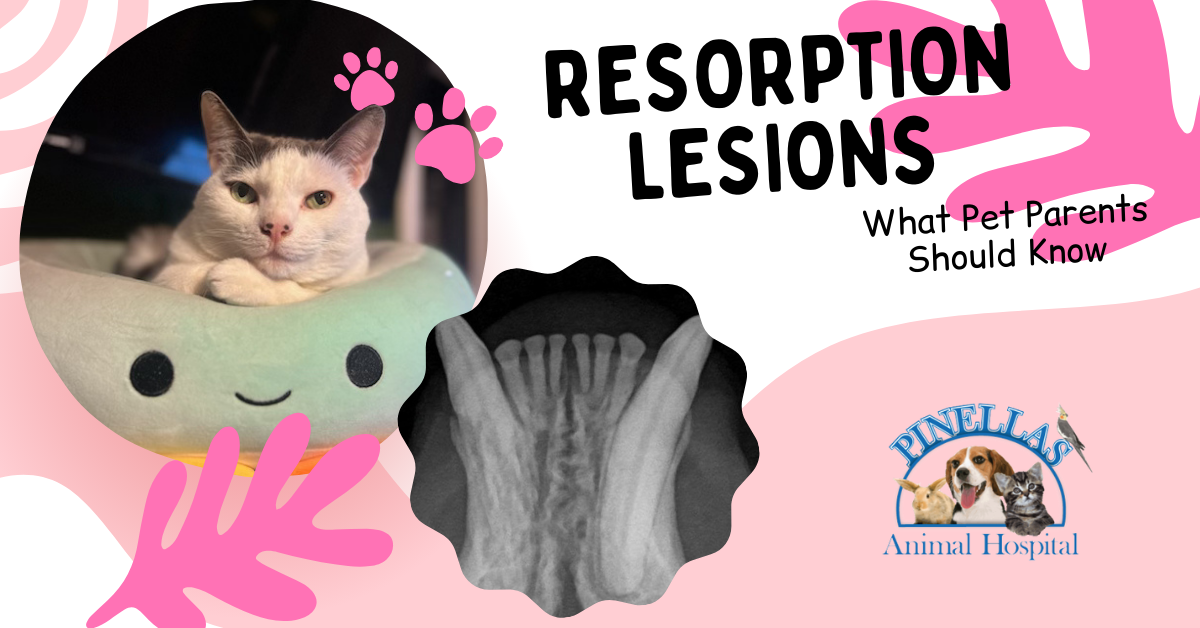
Dental disease is one of the most common health issues we see in pets, and one painful condition that often goes unnoticed is resorptive lesions. These lesions most commonly affect cats, but dogs develop them as well. Because pets are very good at hiding pain, resorptive lesions may progress significantly before owners realize something is wrong. This is one reason why we recommend your pets have an oral health care procedure annually.
What Are Resorptive Lesions?
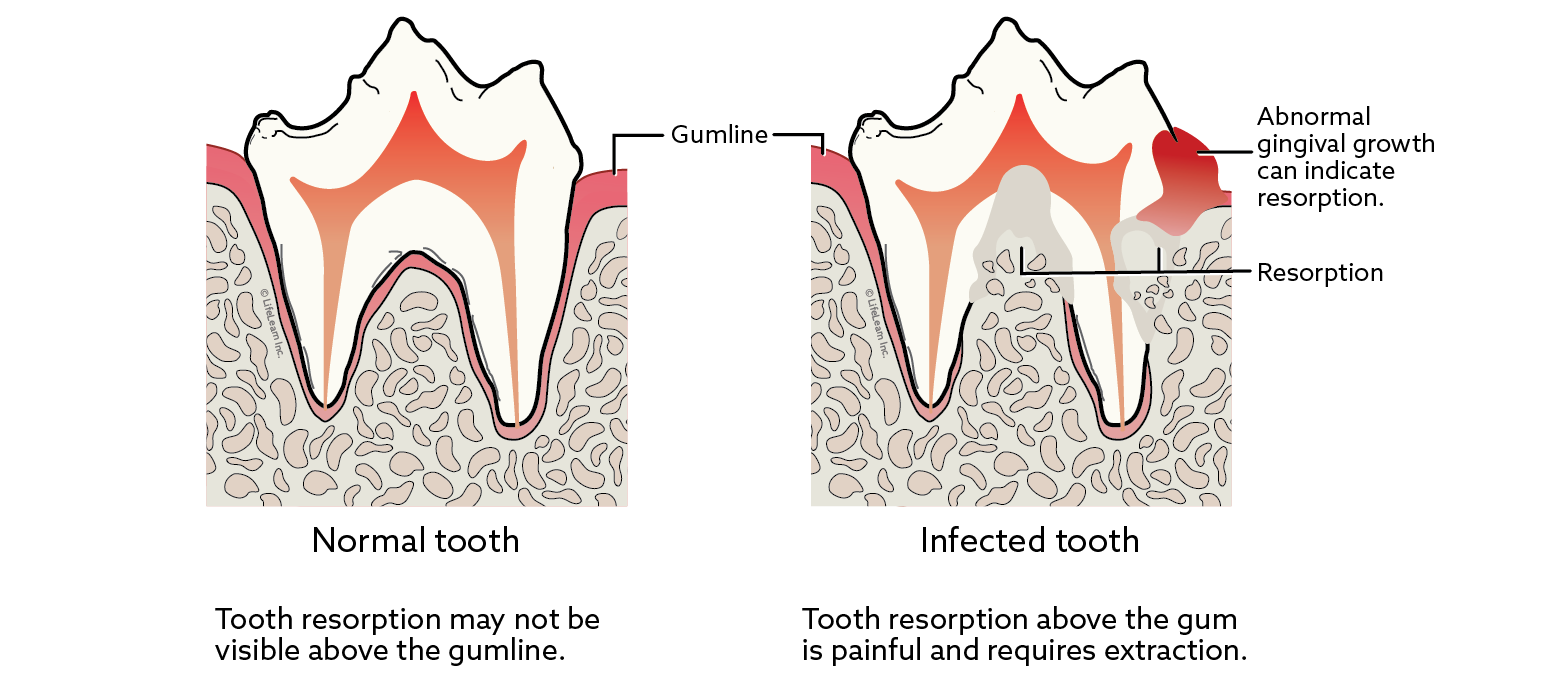
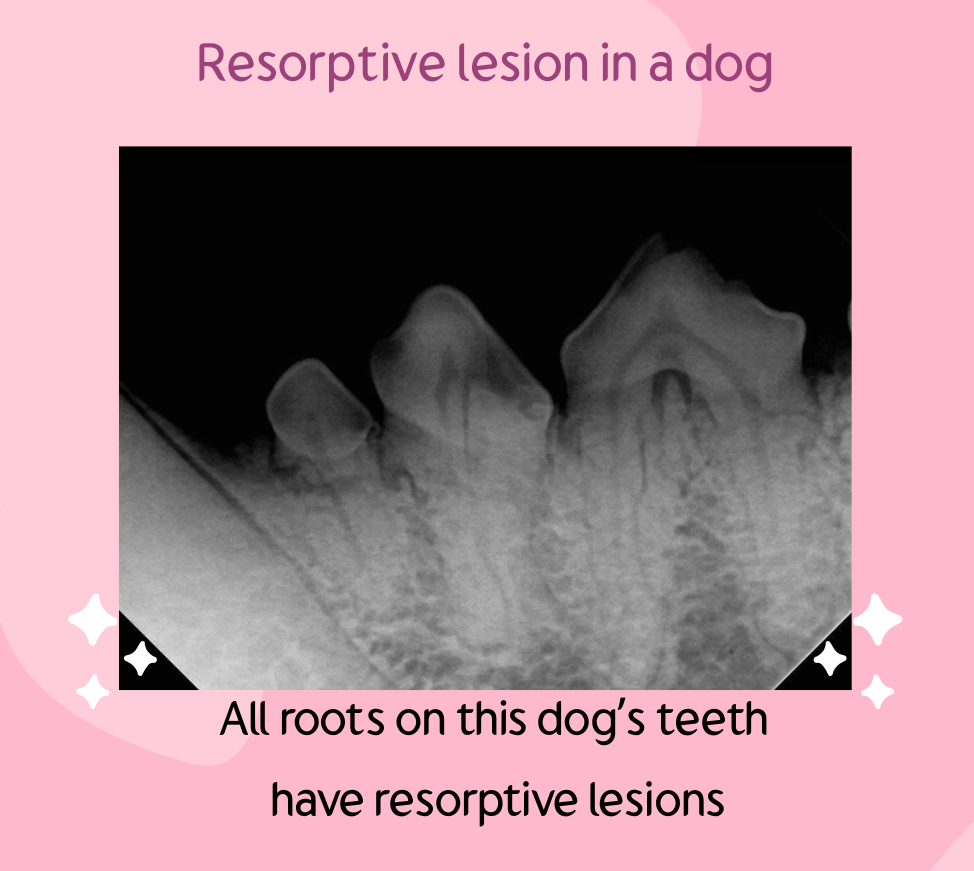
Resorptive lesions occur when a pet’s own body begins to break down and absorb the structure of a tooth, starting at or below the gum line. Over time, this process weakens the tooth and can lead to fractures, infections, and significant discomfort.
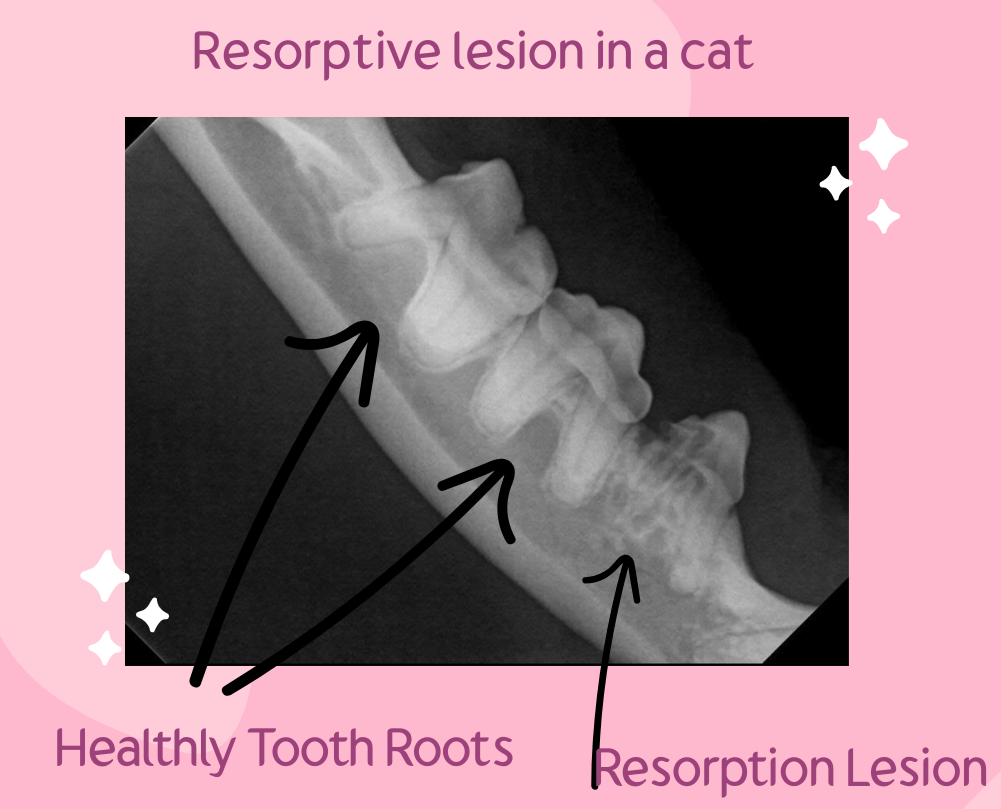
In cats, these are often referred to as feline odontoclastic resorptive lesions (FORLs) and are extremely common. The affected tooth may look normal at first, but as the lesion progresses, the tooth can develop holes, red or inflamed gums, or even appear partially “missing.”
What Causes Resorptive Lesions?
The body’s cells mistakenly begin attacking the tooth structure. Factors that may contribute include:
- Inflammation of the gums
- Dental disease and plaque buildup
- Metabolic or immune system influences
- Age (more common in middle-aged and older pets)
Resorptive lesions are not caused by poor dental care alone, and even pets with otherwise healthy mouths can develop them.
Signs Your Pet May Have a Resorptive Lesion
Because these lesions are painful, pets may show subtle changes such as:
- Dropping food or chewing on one side of the mouth
- Decreased appetite or picky eating
- Excessive drooling
- Bad breath
- Pawing at the mouth or chattering teeth (especially in cats)
- Red, swollen, or bleeding gums
In many cases, resorptive lesions are discovered during a routine dental exam and dental X-rays, even before obvious symptoms appear.
How Are Resorptive Lesions Treated?
There is no way to reverse or stop a resorptive lesion once it has started. The most effective and humane treatment is removal of the affected tooth. While this may sound concerning, pets typically recover very well and experience significant relief once the painful tooth is gone.
Treatment usually involves:
- A full dental exam under anesthesia
- Dental X-rays to evaluate the roots below the gum line
- Surgical extraction of affected teeth
- Pain management and aftercare at home
Leaving a resorptive lesion untreated can lead to chronic pain, infection, and further damage to surrounding teeth and bone.
Can Resorptive Lesions Be Prevented?
Because the exact cause is unknown, resorptive lesions cannot be fully prevented. However, regular dental exams and cleanings allow us to detect them early and treat them before they cause severe pain.
Brushing your pet’s teeth at home, feeding approved dental diets or treats, and scheduling routine veterinary dental care all help maintain overall oral health.
The Bottom Line
Resorptive lesions are a common, painful dental condition, especially in cats, and often go unnoticed without a thorough oral exam. Early detection and treatment can dramatically improve your pet’s comfort and quality of life.
If you’ve noticed changes in your pet’s eating habits or it’s been a while since their last dental exam, we’re here to help. A healthy mouth means a happier, more comfortable pet.